Showing posts with label robert brokenmouth. Show all posts

10 October 2022

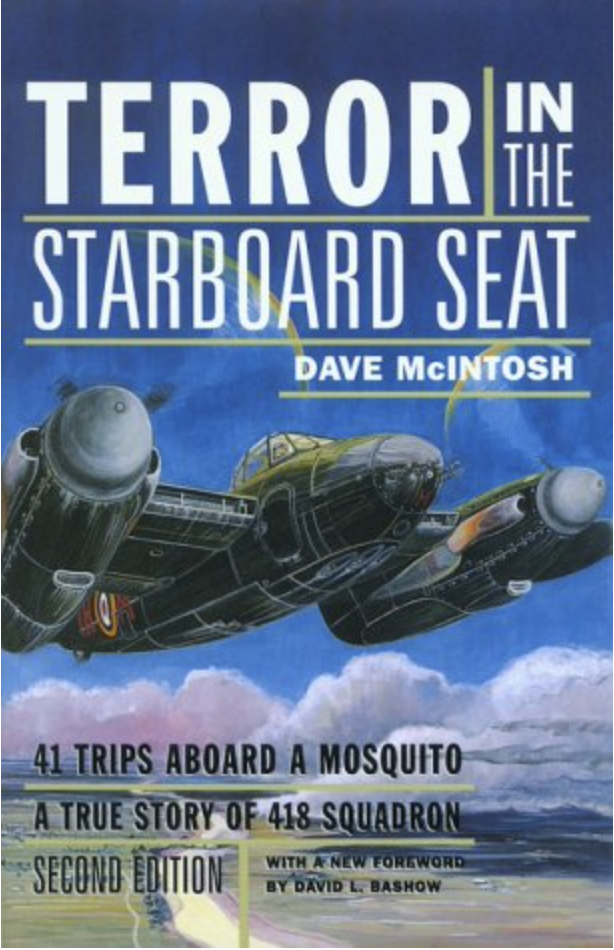
Mosquito Intruder - Dave McIntosh


I am definitely starting to sound like a broken record now: the editing work has not allowed me to get any review writing done recently. Anyway, as ever, I have had a guest review (or three) sitting around waiting to be published. Robert Brokenmouth, a regular ABR guest reviewer, sent this in over a year ago and it has taken me this long to remember to find a half-decent image to use as the cover. I have the later edition of Mosquito Intruder, retitled Terror in the Starboard Seat, and it is one of those books that I have always felt warm and fuzzy about at the prospect of eventually reading it. No pressure now to crank out a review now! Andy Wright

Now then. There aren’t that many books by the chaps in the Mossies who went into hostile territory at night to hunt Luftwaffe night fighters and the occasional target of opportunity. And there aren’t that many books on the aviation war in the Second World War that are actually funny, nor are there that many which focus on the fear felt by the aircrew; Mosquito Intruder ticks all three boxes and for that reason deserves a place on your shelf. And, if you’re one of those nutters who like to have at least one book by a veteran of every squadron possible, McIntosh was with No. 418 Squadron, so that will keep you happy as well.

Not sure what the reason for this is. Certainly Mossie night ops were regarded as ‘safer’ than night bombing by the ground staff, but get in your wayback machine and tell that to the young Dave McIntosh and you’ll get a disbelieving look.

See, young Dave is utterly bloody petrified most of the time and, to read him you’d think he was a mostly incompetent navigator. He (and his pilot) manage to arrive home safely (41 ops) and play this for laughs in the mess to their colleagues. The contrast couldn’t be more stark; while we, as parties interested in wartime aviation, are accustomed to reading hair-raising stories told with aplomb after the years have allowed fear to be stifled or forgotten (at least for an audience), McIntosh’s method offers a critical insight into the reality of that war.

I won’t speculate on the reasons for McIntosh’s obvious ongoing terror (particularly given the relative safety of the Mossie), but I will say that flying accidents while training would not have helped (especially one which could, simply, have happened to anyone). There’s also one particularly ghastly story which I won’t repeat, but it absolutely hammered me when I read it. 

Also amusing is his description of him preferring women to have a large bust because otherwise they’re not worth bothering with; as we continue it becomes apparent that McIntosh is reflecting on his younger, more callow self from a distance of several decades.

That said, despite being an engaging and informative read, I also found it a bit lopsided, as if certain parts of the book were written at different times in the author’s life, or as if some parts were written, then edited before writing the rest. Speculation, of course; the lopsidedness comes from the combination of a rather flip way of expressing things as well as describing things more seriously.

But this is to carp, and anyway, I only have one actual moan and it’s to do with the publisher, not the book; in my copy, pages 62–63, 66–67, 70–71 and 74–75 are all blank – not good odds over 184 pages. 

But such flaws in the publishing world are rare; Mosquito Intruder, or the later, probably better-known, edition Terror in the Starboard Seat, is a must have. 

ISBN 978-0-71953-9-183 or 978-0-77373-0-892
12 April 2022

Boys, Bombs and Brussels Sprouts - J. Douglas Harvey


More than three months into 2022 and all I've done is add several covers of new books as they've crossed my desk. As before, the manuscript editing work is keeping me busy (follow Wright Stuff Editing & Proofreading if you want to get an idea of what I'm up to) and away from review writing, even reading. For the lack of content on here, I apologise. I must also proffer humblest apologies to Robert Brokenmouth, guest reviewer, for holding on to this and two other reviews since July. It doesn't feel like that long, but the emails say otherwise. Here, then, from a writer who knows how to get inside the head of a Bomber Command author, is a review of a book that some have said is quite hilarious (in a good way). That's not something you come across too often with BC, but there you have it. It's also a book I simply have not been able to find a nice copy of for a decent price. When I do, the postage is silly. Anyway, that's too many of my woes. Enjoy. Andy Wright.


We all have our favourite aviation books. You might think mine can be guessed at: Cheshire, Gibson, Charlwood, Cusack, Ollis.


Well, those five, yes. But there are several others; Yates (see here) is one, and this little cracker is another.


While some of us buy a military autobiography because we have an interest in the historical events, the small boy inside us (certainly me, I’m afraid) wants nothing but incredible adventures. Mel Rolfe’s series of books were hugely popular for that reason. Sprouts is brimming with events and details I have never read before in an aviation biography (never mind one on Bomber Command). Harvey’s knack of recall of specific things brings into sharp focus the grimmer everyday aspects of RAF life – told in such a way that sharp cackles of laughter on the bus are so frequent that you’ll get looks from disapproving teenagers. I won’t spoil it – though I’d love to – but Harvey tells his story with frankness, comic contempt, and an astonishing tenderness. It’s a hugely powerful book and, if you've not read it, you are in for a treat.


Harvey, a Canadian, joined No. 408 Squadron, Bomber Command, in June 1943 and survived to be screened in April 1944. Like Cusack and Ollis, he has little respect for the RAF system of promotion (arguing with the CO about the fact that officers get more pay than sergeants and all essentially do the same job; again, I won't spoil it). Unlike those two, however, he can recount a fantastic and very rare appearance by Bomber Harris.  


Lastly, if there’s a sorely overlooked book of the bombing war just waiting to be written, it's about the fussy, impractical, bullet-proof officer who wangles a posting to ops and proceeds to stuff everything up with a sort of self-justified glee. Cusack and Ollis each encountered one of these ding-bats (to the point where one surmises that a principal reason for writing about their experiences in the first place is to reveal and humiliate the ding-bat). Yates was one of these training characters, but he at least comprehended that he was far from invincible and endeavoured to bring back his crew (and himself) alive. Harvey encounters not one but two (leading me to think there should definitely be more known about these characters); and, not wishing to spoil the surprise, I’ll leave it there.


Let your fingers do the walking, as they say, and fish out the credit card. This is a somewhat under-appreciated (I won’t say ‘forgotten’) work that should be a perennial like the works of the ‘famous five/six’ mentioned above.

ISBN 978-0-77104-0-481

21 March 2019

75 (NZ) Squadron - Chris Ward and Chris Newey


It’s been a while since I’ve featured a guest reviewer and now seems as good a time as any what with the amount of work I have on at the moment that is taking me away from review writing for ABR. Robert Brokenmouth is the editor of Wakefield Press’ two most successful aircrew books published this century: They Hosed Them Out and 101 Nights. Both are books written as fiction by their former aircrew authors, but, as Robert was able to discover and then prove with extensive references, both titles are actually slightly fictionalised memoirs. They are also incredible reads and enduring, yet underrated, Australian aircrew classics. Robert is also a music reviewer of note with a particular style and entertaining turn of phrase. It is, therefore, a treat to feature one of his aircrew book reviews here for the first time. Andy Wright

Essential purchase. Cheap, given the fact this monster runs to 475 pages, all on foolscap-size paper. Holy moly! Okay, let's get our breath back. Why is the book so thick? Partly because 75 Squadron flew "more sorties than any other Allied heavy bomber squadron, suffering the second-highest number of casualties”. Also, there's a wealth of photos but, crucially, the publisher hasn't opted for brevity over quality - this series aims to provide the best overview of each squadron possible. It's not just 'a topic' to the writers, it's a vivid reality.

For many years 75 Squadron was famous; consequently it's been covered in other books (Saunders' Return at Dawn, and Franks' Forever Strong, for example). So why on earth would you buy Mention the War's profile? And especially one this fat?

Well, firstly, Saunders' book is very hard to come by. And, second, Franks' book covers the squadron history from 1916 to 1990 and, at 252 pages, that's essentially an overview, not an in-depth look at the unit’s operations in World War Two like this. Ah, see, now we're talking.

Have you ever met a real stamp collector? I mean, the kind who research the period and countries they're interested in, who also collects postmarks as much as stamps? These are the kind of people interested in the reality of history, who don't just read a book, they have period maps, background reading and biographies. And stonking reference books like this. 

Ward and Newey's achievement here is quite, quite remarkable, telling a huge story with as much detail as possible (in the circumstances - nothing short of reprints of the Operations Record Book (or Form 540, or ORB) will satisfy some of us), giving us names, details, events. It's a herculean task. 

I asked Newey about it (Facebook is occasionally useful). "Chris Ward wrote the initial manuscript, I curated the photos and provided some New Zealand and background content, based on the research I'd done, and the comprehensive squadron databases compiled by Simon Sommerville, who you should mention, as he's put an enormous amount of work into his website www.75nzsquadron.com.”

The squadron became famous for several reasons during the war (I'll let you find out about a few of those yourself), but a couple of members of the squadron you'll have heard of. One of the most incredible acts of bravery to earn the (inevitably embarrassed) hero a VC was performed by ‘Jimmy’ Ward, co-pilot of a Wellington after a raid on Munster on 7 July 1941. After an attack by a night-fighter, one of the fuel tanks on the starboard wing caught fire. Ward volunteered to climb out onto the wing to put the fire out. If you're not familiar with the story, I won't spoil it.

Newey and Ward (apparently no relation) simply quote from the ORB and, believe me, that makes for extraordinary reading (there are other accounts; Hector Bolitho, in Penguin in the Eyrie, describes meeting Jimmy at the Savoy Hotel bar and bandaging his finger, Jimmy died in action a few days later).

Navigator Eric Williams found himself on the wrong end of a parachute after his Stirling was attacked on 17 December 1942. If the name seems familiar, it's because he escaped from Stalag Luft III, with Michael Codner and Oliver Philpot, and reached neutral Sweden a little over a year after his initial capture. See The Wooden Horse, film or book or both.

Other notables rubbed shoulders with the unwashed in 75 Squadron. Frank Gill continued in the RNZAF after the war, rising to be air commodore before entering politics, ending his career as NZ Ambassador to the USA, and Sir Douglas Lowe stayed in the RAF to become quite a senior officer indeed. "Not famous in their own right," continues Newey, "but two individuals who were lost in action were brothers of famous people - pilot Raymond Going, brother of legendary All Black halfback Sid Going, and navigator James Lovelock, brother of Olympic 1500m gold medallist and world record-holder Jack Lovelock. Another unique character was Sergeant Sir Charles Thomas Hewitt Mappin, RAFVR, a baronet and member of the House of Lords, who volunteered as a gunner in the RAF, and is said to have refused a commission and a ground job. Killed in action."

During World War Two, 75 Squadron took part in 739 operations, putting up aircraft for 8017 sorties. They're just numbers until you remember, 'Oh, yeah, there was usually only about a three percent chance of you making it through a tour of 30 operations'. 

Unlike stamp collectors and their knowledgeable breadth of history, when you pick up RAF Bomber Command Profiles: 75 (NZ) Squadron, sure, you'll be thrilled, you'll be dumbstruck, you'll have a decent whisky to hand and possibly some cheesy snacks, but you'd have to have a heart of stone not to need a box of tissues handy.

ISBN 978-1-9112553-4-5